
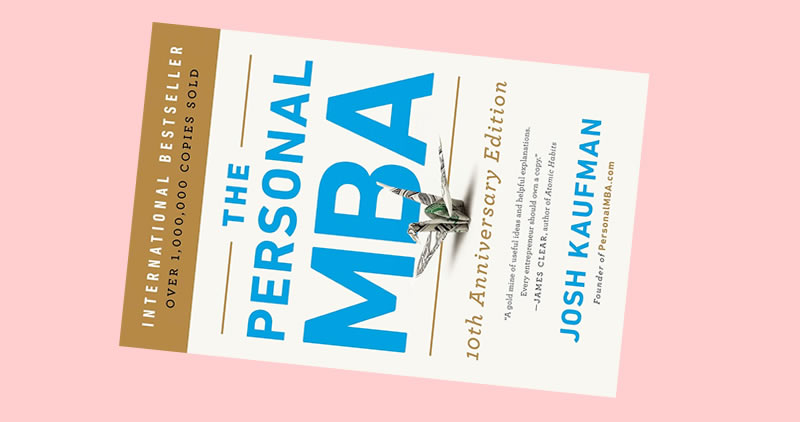
In today’s fast-paced business world, entrepreneurs and aspiring business leaders are constantly seeking ways to enhance their knowledge and skills. While traditional MBA programmes offer comprehensive education, they often come with a hefty price tag and significant time commitment. Enter “The Personal MBA” by Josh Kaufman, a book that promises to deliver the essence of business education without the need for formal schooling. This review will delve deep into Kaufman’s work, exploring its key concepts, strengths, and potential limitations, all while examining how it can benefit entrepreneurs and business professionals.
Introduction to the Personal MBA
Josh Kaufman’s “The Personal MBA” was first published in 2010 and has since become a go-to resource for self-taught business education. The book’s premise is simple yet ambitious: to provide readers with a comprehensive understanding of business fundamentals without the need for an expensive and time-consuming MBA program. Kaufman argues that most of the essential business concepts can be learned through self-study, careful observation, and practical application.
The book covers a wide range of topics, from value creation and marketing to finance and systems thinking. It’s designed to give readers a holistic view of how businesses operate and the skills needed to succeed in various business environments. Let’s explore the key areas covered in “The Personal MBA” and how they can benefit entrepreneurs and business professionals.
Value Creation and Business Fundamentals
At the core of any successful business is the ability to create value for customers. Kaufman emphasises this concept early in the book, explaining that businesses thrive when they solve problems or fulfil desires for their target market. He introduces readers to the five parts of every business:
- Value Creation
- Marketing
- Sales
- Value Delivery
- Finance
Understanding these fundamental components is crucial for entrepreneurs as they develop their business ideas and strategies. Kaufman provides clear explanations and examples for each, helping readers grasp how these elements interact to form a successful business model.
The Importance of Systems Thinking
One of the standout aspects of “The Personal MBA” is its focus on systems thinking. Kaufman argues that businesses are complex systems with many interconnected parts. By understanding how these systems work, entrepreneurs can make better decisions and create more efficient operations.
The book introduces concepts such as feedback loops, constraints, and leverage points, which are essential for optimising business processes. For entrepreneurs, this systems-based approach can be invaluable when scaling their operations or troubleshooting issues within their organisations.
Human psychology and business
Another strength of Kaufman’s book is its exploration of human psychology and its impact on business. He covers topics such as:
- Decision-making processes
- Cognitive biases
- Motivation and productivity
- Social dynamics in the workplace
By understanding these psychological factors, entrepreneurs can better navigate customer relationships, team management, and their own decision-making processes. This knowledge is particularly valuable for those in leadership positions, as it helps in creating more effective marketing strategies, improving team dynamics, and enhancing overall business performance.
Marketing and sales strategies
“The Personal MBA” offers a comprehensive look at marketing and sales, two critical aspects of any business. Kaufman breaks down complex marketing concepts into digestible chunks, covering topics such as:
- Attention and awareness
- Trust and credibility
- Pricing strategies
- Sales techniques
For entrepreneurs, this section provides valuable insights into how to attract and retain customers. The book emphasises the importance of understanding your target market, crafting compelling value propositions, and building trust with potential customers.
Kaufman also delves into various sales techniques, explaining how to guide prospects through the decision-making process. This knowledge is crucial for entrepreneurs who often need to wear multiple hats, including that of a salesperson, especially in the early stages of their business.
Financial Intelligence for Entrepreneurs
One of the most intimidating aspects of business for many entrepreneurs is finance. Kaufman demystifies financial concepts, making them accessible to readers without a background in accounting or finance. He covers essential topics, such as:
- Profit margins and pricing
- Cash flow management
- Return on investment (ROI)
- Financial statements
Understanding these financial concepts is crucial for making informed business decisions. Entrepreneurs who grasp these principles are better equipped to manage their company’s finances, make strategic investments, and communicate effectively with investors or financial institutions.
Productivity and personal effectiveness
In addition to business-specific concepts, “The Personal MBA” also focuses on personal productivity and effectiveness. Kaufman recognises that an entrepreneur’s success often hinges on their ability to manage time, energy, and attention effectively. He introduces readers to concepts such as:
- The importance of focus and concentration
- Effective goal-setting techniques
- Time management strategies
- Stress management and work-life balance
These skills are especially valuable for entrepreneurs, who often face long working hours and high-stress situations. By implementing Kaufman’s productivity techniques, business leaders can improve their personal effectiveness and, by extension, the performance of their organisations.
Innovation and competitive advantage
In today’s rapidly evolving business environment, innovation is key to maintaining a competitive edge. “The Personal MBA” addresses this crucial aspect of business success by exploring:
- The innovation process
- Identifying market opportunities
- Developing unique value propositions
- Protecting intellectual property
Kaufman’s insights on innovation can help entrepreneurs identify new opportunities in their markets and develop products or services that stand out from the competition. This section of the book is particularly valuable for startups and small businesses looking to carve out their niche in crowded markets.
Leadership and management skills
Effective leadership is a critical skill for any entrepreneur or business professional. “The Personal MBA” offers valuable insights into leadership and management, covering topics such as:
- Team building and collaboration
- Effective communication
- Delegation and empowerment
- Conflict resolution
These skills are essential for entrepreneurs as their businesses grow and they take on more managerial responsibilities. Kaufman’s approach to leadership emphasises the importance of creating a positive work culture, setting clear expectations, and fostering employee growth and development.
Ethical Considerations in Business
An often-overlooked aspect of business education is ethics, but Kaufman doesn’t shy away from this important topic. He discusses the importance of ethical decision-making in business, covering areas such as:
- Corporate social responsibility
- Sustainable business practices
- Ethical marketing and sales techniques
- Building trust with stakeholders
For entrepreneurs, understanding and implementing ethical business practices is not just a moral imperative but also a strategic advantage. Consumers are increasingly drawn to companies that demonstrate strong ethical values, making this knowledge crucial for long-term business success.
Practical Application and Case Studies
One of the strengths of “The Personal MBA” is its focus on practical application. Throughout the book, Kaufman provides numerous real-world examples and case studies to illustrate key concepts. These practical examples help readers understand how to apply the theories and strategies to their own businesses.
The case studies cover a wide range of industries and business sizes, making the book relevant to entrepreneurs at various stages of their journey. From solo entrepreneurs to founders of rapidly growing startups, readers can find examples that resonate with their specific situations.
Critique and Limitations
While “The Personal MBA” offers a wealth of valuable information, it’s important to acknowledge its limitations. Some critics argue that the book oversimplifies complex business concepts and may not provide the depth of knowledge offered by traditional MBA programs. Additionally, the lack of peer interaction and networking opportunities, which are significant benefits of formal business education, is a notable drawback of the self-study approach.
However, it’s worth noting that Kaufman doesn’t position his book as a replacement for formal education but rather as a comprehensive introduction to business concepts. For many entrepreneurs, especially those just starting out or running small businesses, the level of detail provided in “The Personal MBA” may be sufficient for their immediate needs.
Complementary Resources and Further Learning
Recognising that no single book can cover all aspects of business education, Kaufman provides readers with a wealth of additional resources. The book includes an extensive bibliography and recommendations for further reading on specific topics. This approach encourages readers to continue their learning journey beyond the book itself.
For entrepreneurs looking to supplement their reading with practical experience, Kaufman suggests various ways to apply the concepts learned, such as:
- Starting small side projects to test business ideas
- Seeking mentorship from experienced business professionals
- Participating in local business groups or entrepreneurship meetups
- Taking on freelance projects to gain diverse business experience
These suggestions help readers bridge the gap between theory and practice, a crucial step in developing real-world business skills.
The Personal MBA’s Impact on Entrepreneurship
Since its publication, “The Personal MBA” has had a significant impact on the entrepreneurship community. Many successful business leaders and startup founders have cited the book as a valuable resource in their journey. Its accessibility and comprehensive coverage of business topics have made it a popular choice for aspiring entrepreneurs who may not have the time or resources for formal business education.
The book’s emphasis on self-directed learning and practical application aligns well with the entrepreneurial spirit of innovation and self-reliance. It has empowered many individuals to take control of their business education and apply their knowledge to real-world challenges.
Applying the Personal MBA Principles to Your Business
For entrepreneurs looking to apply the principles from “The Personal MBA” to their own businesses, here are some practical steps to consider:
- Conduct a thorough analysis of your business model using Kaufman’s five-part framework (value creation, marketing, sales, value delivery, and finance).
- Implement systems thinking in your operations by mapping out your business processes and identifying areas for optimisation.
- Review your marketing and sales strategies, focusing on creating clear value propositions and building trust with your target audience.
- Assess your financial literacy and implement robust financial management practices in your business.
- Develop a personal productivity system based on Kaufman’s recommendations to improve your effectiveness as a business leader.
- Foster innovation in your organisation by encouraging creative thinking and staying attuned to market opportunities.
- Enhance your leadership skills by focusing on effective communication, team building, and ethical decision-making.
- Continuously educate yourself on business topics, using the resources and further reading suggestions provided in the book.
The Personal MBA vs. Traditional Business Education
One of the most debated aspects of “The Personal MBA” is how it compares to traditional business education, particularly MBA programs. While the book can’t replicate the full experience of a two-year MBA programme, it offers several advantages:
- Cost-effectiveness: The book is significantly less expensive than a full MBA programme, making business education more accessible to a wider audience.
- Flexibility: Readers can study at their own pace and focus on the areas most relevant to their specific business needs.
- Practical focus: The book emphasises practical application over theoretical concepts, which can be particularly beneficial for entrepreneurs.
- Time efficiency: The condensed format allows readers to gain a broad understanding of business concepts in a fraction of the time required for a traditional MBA.
However, it’s important to note that traditional MBA programmes offer benefits that can’t be replicated by a book, such as:
- Networking opportunities with peers and faculty
- Access to career services and job placement assistance
- In-depth specialisation in specific business areas
- Hands-on projects and internships with established companies
Ultimately, the choice between self-study with resources like “The Personal MBA” and pursuing a traditional MBA depends on individual circumstances, career goals, and learning preferences.
The Role of Continuous Learning in Entrepreneurship
One of the key messages in “The Personal MBA” is the importance of continuous learning. Kaufman emphasises that business education doesn’t end with reading a book or completing a degree program. Successful entrepreneurs are those who commit to lifelong learning and consistently seek to improve their skills and knowledge.
This emphasis on continuous learning is particularly relevant in today’s rapidly changing business environment. Technologies, market conditions, and consumer preferences are constantly evolving, and entrepreneurs need to stay ahead of these changes to remain competitive.
“The Personal MBA” provides a solid foundation for business knowledge, but it also instills in readers the habit of self-directed learning. This skill is invaluable for entrepreneurs who need to adapt quickly to new challenges and opportunities in their industries.
Implementing Personal MBA Principles in Different Business Stages
The principles outlined in “The Personal MBA” can be applied at various stages of business development. Here’s how entrepreneurs can leverage these concepts throughout their journey:
- Startup Phase:
- Use the value creation framework to refine business ideas.
- Apply marketing principles to identify and reach target customers.
- Implement basic financial management practices.
- Growth Phase:
- Utilise systems thinking to optimise operations and scale efficiently.
- Enhance sales strategies to expand the customer base.
- Develop leadership skills to manage growing teams.
- Mature Business Phase:
- Focus on innovation to maintain a competitive advantage.
- Implement advanced financial strategies for long-term sustainability.
- Refine organisational culture and management practices.
By adapting the book’s principles to their specific business stage, entrepreneurs can continue to derive value from “The Personal MBA” as their companies evolve.
The Impact of Technology on Business Education
While “The Personal MBA” provides a comprehensive overview of business fundamentals, it’s worth noting that the business world is constantly evolving, particularly in the realm of technology. Since the book’s publication, there have been significant advancements in areas such as:
- E-commerce and digital marketing
- Data analytics and business intelligence
- Artificial intelligence and machine learning
- Blockchain and cryptocurrency
Entrepreneurs should supplement their reading of “The Personal MBA” with up-to-date information on these technological trends and their impact on business practices. This combination of timeless business principles and current technological knowledge can provide a powerful foundation for entrepreneurial success.
Building a personal MBA community
One aspect that “The Personal MBA” can’t directly provide is the community and networking opportunities that come with traditional business education. However, entrepreneurs can create their own “Personal MBA” community to enhance their learning experience.
- Form study groups with other entrepreneurs to discuss the book’s concepts.
- Participate in online forums and social media groups dedicated to business education.
- Attend local business meetups and entrepreneurship events.
- Seek out mentors who can provide guidance and real-world insights.
By actively engaging with others on their learning journey, entrepreneurs can gain diverse perspectives and create valuable connections that can benefit their businesses in the long run.
Measuring the ROI of Self-Directed Business Education
For many entrepreneurs, investing time and resources in self-directed business education through books like “The Personal MBA” is a significant decision. It’s important to measure the return on this investment. Here are some ways to assess the impact of your learning:
- Track improvements in business performance metrics.
- Monitor personal productivity and decision-making effectiveness.
- Evaluate the success of new strategies implemented based on the book’s principles.
- Assess your confidence and competence in handling various business challenges.
By regularly evaluating the impact of your learning, you can ensure that you’re deriving maximum value from your self-directed business education.
Conclusion: The Value of the Personal MBA for Entrepreneurs
“The Personal MBA” by Josh Kaufman offers a comprehensive and accessible introduction to essential business concepts. Its broad coverage of topics, from value creation to personal productivity, makes it a valuable resource for entrepreneurs at various stages of their journey.
The book’s strengths lie in its practical approach, clear explanations of complex concepts, and emphasis on application. It provides a solid foundation for understanding how businesses operate and offers strategies for improving personal effectiveness and business performance.
While it can’t replace the depth of knowledge and networking opportunities provided by traditional MBA programmes, “The Personal MBA” serves as an excellent starting point for entrepreneurs looking to enhance their business acumen. Its focus on self-directed learning and continuous improvement aligns well with the entrepreneurial mindset.
For those willing to invest the time and effort in studying and applying its principles, “The Personal MBA” can be a powerful tool in developing essential business skills. The knowledge gained from this book can significantly contribute to entrepreneurial success when combined with real-world experience, ongoing learning, and engagement with the business community.
Ultimately, “The Personal MBA” empowers entrepreneurs to take control of their business education, providing them with the knowledge and tools needed to navigate the complex business world. Whether you’re a startup founder, small business owner, or aspiring entrepreneur, this book offers valuable insights that can help you build and grow a successful business in today’s competitive marketplace.