
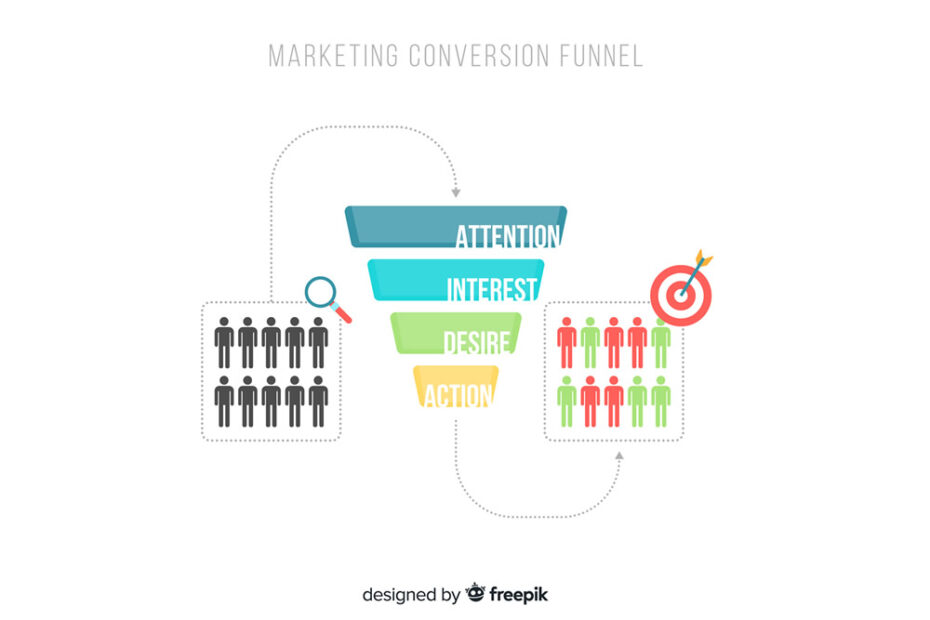
For small and medium-sized enterprises (SMEs), understanding the sales funnel is crucial for effective customer acquisition, higher conversion rates, and long-term business growth. A sales funnel represents the journey your potential customers take from first awareness of your business to making a purchase. While it can be complex in large-scale operations, the principles of a simple sales funnel are easy to grasp and highly actionable.
This guide breaks down the stages of a simple sales funnel, their relevance, and practical applications to help SMEs make smarter business decisions and drive sustainable growth.
What Is a Sales Funnel?
A sales funnel is a visual representation of the customer journey. The term “funnel” is used because the number of prospects typically decreases at each stage, narrowing from a broad pool of potential leads to a smaller group of paying customers.
For SMEs, a sales funnel is not just a theoretical concept—it is a practical tool for understanding customer behaviour, identifying bottlenecks in the sales process, and optimising marketing and sales efforts to increase revenue.
By mapping the customer journey clearly, businesses can allocate resources more effectively and implement strategies that maximise conversions.
Stage 1: Awareness
Definition: The top of the funnel, where potential customers first become aware of your business, products, or services.
Key Activities:
Social media campaigns, blog posts and content marketing, search engine optimisation (SEO), paid advertising (Google Ads, Facebook Ads)
Practical Tips for SMEs:
Focus on creating content that solves a problem your target audience has. Use SEO strategically to ensure your business appears in search results when potential customers are actively seeking solutions. Track which marketing channels bring in the most traffic to refine your approach.
Relevance: Awareness is critical because if prospects don’t know you exist, they can’t become customers. A strong awareness strategy ensures a steady flow of leads into the funnel.
Stage 2: Interest
Definition: Prospects engage with your brand and start showing interest in what you offer.
Key Activities:
Email newsletters, informative webinars or guides, engaging social media posts, lead magnets like free eBooks or trials
Practical Tips for SMEs:
Personalise your messaging to match the interests of different audience segments. Provide valuable information without pushing for a sale immediately. Encourage interaction through comments, shares, or sign-ups to deepen engagement.
Relevance: Building interest nurtures trust. The stronger the engagement at this stage, the higher the likelihood of conversion later.
Stage 3: Consideration
Definition: Potential customers actively evaluate your product or service against competitors and decide if it suits their needs.
Key Activities:
Product demos, case studies and testimonials, free trials or samples, detailed product information
Practical Tips for SMEs:
Showcase real-life success stories to demonstrate credibility. Address objections clearly and transparently. Provide comparison tools or guides to help prospects make informed decisions.
Relevance: Consideration is where prospects weigh value, quality, and trust. SMEs that perform well here can differentiate themselves from competitors and increase conversion rates.
Stage 4: Purchase
Definition: The bottom of the funnel, where a prospect becomes a paying customer.
Key Activities:
Streamlined checkout processes, special offers or incentives, sales follow-ups, excellent customer support
Practical Tips for SMEs:
Make the buying process as simple and frictionless as possible. Offer multiple payment options and transparent pricing. Follow up post-purchase to ensure satisfaction and encourage repeat business.
Relevance: The purchase stage is the ultimate goal of your sales funnel. Converting prospects effectively here ensures immediate revenue and sets the stage for customer loyalty.
Stage 5: Retention (Optional but Strategic)
Definition: Beyond the traditional funnel, retaining customers ensures repeat business and brand advocacy.
Key Activities:
Loyalty programmes, regular updates or newsletters, personalised offers for returning customers, excellent post-sale support
Practical Tips for SMEs:
Invest in building long-term relationships rather than focusing solely on one-time sales. Encourage referrals to organically expand your customer base. Monitor customer satisfaction and respond proactively to feedback.
Relevance: Retention reduces marketing costs, increases lifetime customer value, and supports sustainable business growth.
Why Understanding the Sales Funnel Matters for SMEs
Better decision-making: By visualising where prospects drop off, SMEs can make data-driven decisions to improve sales strategies.
Optimised marketing spend: Allocate resources to stages that need the most attention, increasing ROI.
Sustainable growth: Nurturing leads effectively at each stage fosters repeat customers and long-term stability.
Competitive advantage: SMEs that understand and implement a structured sales funnel can compete more effectively with larger businesses.
Practical Steps to Implement a Simple Sales Funnel
Map your customer journey from awareness to purchase.
Identify content and touchpoints for each stage.
Track engagement metrics to pinpoint weak spots.
Optimise campaigns and sales processes based on data.
Continuously refine the funnel to accommodate changing customer behaviour.
Conclusion
A simple sales funnel is an essential framework for SMEs to understand, manage, and optimise the customer journey. By recognising the stages—awareness, interest, consideration, purchase, and retention—businesses can implement targeted strategies that improve conversions, build customer loyalty, and achieve sustainable growth.
SMEs that actively manage their sales funnel gain clarity, improve decision-making, and can confidently scale their operations, turning potential leads into loyal customers while staying ahead of the competition.