
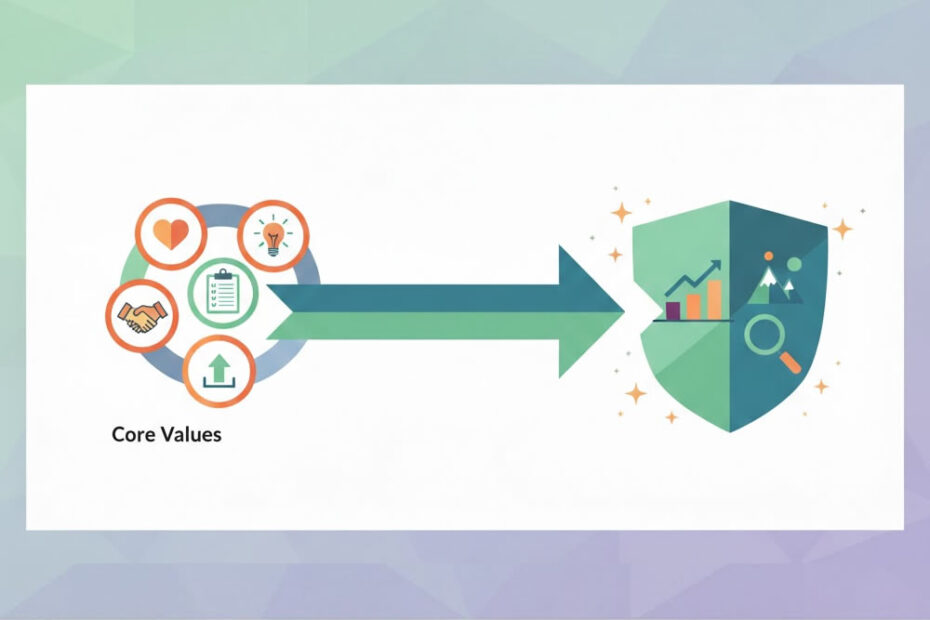
In today’s hyper-competitive business environment, small and medium enterprises (SMEs) face constant pressure to differentiate themselves. While product features, pricing, and marketing often dominate the conversation, one of the most powerful yet underutilised tools for sustainable success lies in your core values. When properly leveraged, core values are not just statements on a wall—they become a competitive advantage that shapes culture, decision-making, and customer loyalty.
This article explores how SMEs can transform core values into actionable strategies that drive growth, enhance operational efficiency, and reinforce long-term stability.
Understanding Core Values and Their Strategic Importance
Core values are the fundamental beliefs and guiding principles that define an organisation’s identity. They influence behaviour, decision-making, and relationships both internally and externally. For SMEs, core values serve as a north star, aligning teams and ensuring consistent actions across the business.
Strategic importance of core values:
-
Alignment: Ensures employees, management, and stakeholders share a unified direction.
-
Decision-making: Provides a framework for making difficult choices under uncertainty.
-
Differentiation: Distinguishes your brand from competitors in ways that are meaningful to customers.
Without deliberate action, core values risk becoming empty phrases. To transform them into a competitive advantage, SMEs must embed them into every facet of their operations.
Embedding Core Values in Daily Operations
To leverage core values effectively, SMEs need to operationalise them. This goes beyond verbal reinforcement; it requires consistent application across policies, processes, and behaviours.
1. Recruitment and Team Culture
Hiring decisions should reflect core values. For example, if integrity is a core value, recruitment should prioritise candidates who demonstrate honesty, transparency, and accountability. This ensures cultural consistency and reduces conflicts, creating a team aligned with the organisation’s ethos.
2. Customer Experience
Core values should guide every interaction with customers. A company that values responsiveness and empathy can differentiate itself by providing faster, personalised service. Over time, these interactions become part of the brand identity, building loyalty and repeat business.
3. Product and Service Development
Innovate in ways that reflect your values. A commitment to sustainability can influence sourcing decisions, packaging, and product lifecycle management. This attracts customers who share your values and positions your business as a market leader in ethical practices.
4. Decision-Making Frameworks
Embed values into governance and strategy. When facing difficult decisions, refer back to core values as criteria. This reduces ambiguity, strengthens accountability, and ensures consistency, even during crises.
Communicating Core Values Externally
While internal alignment is essential, the true competitive edge comes when core values are visible to customers, partners, and stakeholders.
Practical strategies:
-
Brand Messaging: Incorporate core values into marketing campaigns, social media content, and customer communications.
-
Storytelling: Share real-world examples of values in action, such as ethical sourcing, community engagement, or employee development.
-
Partnerships: Collaborate with organisations that share similar values to reinforce your positioning and broaden reach.
External alignment reinforces trust and credibility, strengthening your market position.
Measuring the Impact of Core Values
To ensure core values translate into tangible advantage, SMEs should track relevant metrics:
-
Employee engagement and retention: A strong values-aligned culture improves morale and reduces turnover.
-
Customer satisfaction and loyalty: Values-driven experiences increase repeat purchases and advocacy.
-
Operational efficiency: Alignment reduces internal friction and accelerates decision-making.
Regular review and refinement of core values in practice ensure they remain relevant and impactful.
Real-World Example: Core Values as Differentiator
Consider a small enterprise that prioritises innovation and customer focus. By embedding these values into its processes:
-
Employees are encouraged to propose product improvements, enhancing creativity.
-
Customer feedback is systematically collected and acted upon, improving satisfaction.
-
Marketing campaigns highlight these values, attracting a loyal customer base that appreciates responsiveness and ingenuity.
Over time, competitors struggle to replicate this alignment, giving the business a sustainable competitive advantage.
Conclusion
For SMEs, core values are far more than aspirational statements—they are strategic assets that, when embedded into culture, operations, and brand identity, create a distinctive competitive edge. By hiring for values, aligning customer experience, innovating through principles, and measuring impact, businesses can turn their beliefs into tangible growth, better decision-making, and long-term stability.
Investing time and effort into operationalising core values pays dividends not only in profitability but also in employee engagement, customer loyalty, and market reputation. In the modern business landscape, values-driven enterprises are the ones that endure and thrive.