
In many small and medium-sized enterprises (SMEs), the mission statement is proudly displayed on the website and office walls—yet rarely reflected in daily decisions. This disconnect is not just cosmetic; it is costly.
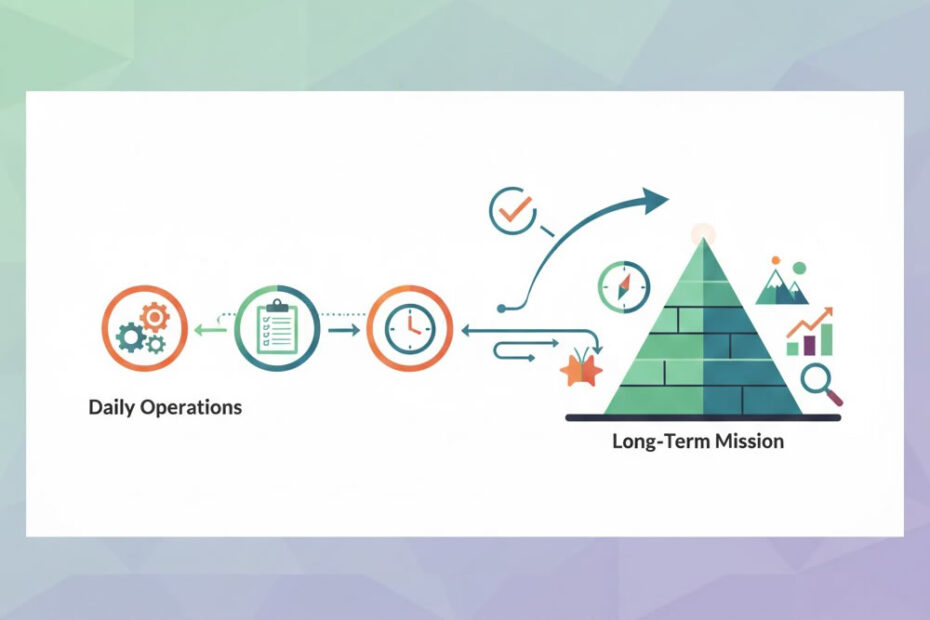
Aligning daily operations with long-term mission is one of the most powerful ways to improve strategic clarity, operational efficiency, and sustainable growth. When properly implemented, it transforms your mission from a slogan into a decision-making compass.
This article explains how SMEs can practically align operations with mission, why it strengthens long-term stability, and how to implement it without disrupting business flow.
Why Alignment Matters for SMEs
For large corporations, inefficiencies can be absorbed. For SMEs, misalignment is dangerous. It shows up as:
-
Confused staff priorities
-
Inconsistent customer experience
-
Short-term decisions that contradict long-term goals
-
Wasted time and resources
-
Reduced profitability
When operations and mission are aligned:
-
Decision-making becomes faster and clearer
-
Employees understand what truly matters
-
Customers experience consistency
-
Resources are allocated strategically
-
Growth becomes intentional rather than accidental
This is not theory. It directly improves business performance and long-term stability.
Understanding the Connection Between Mission and Operations
Your mission defines why your business exists and the value it intends to create.
Your daily operations reflect how that value is delivered in real time.
Alignment means every operational activity—sales, procurement, customer service, marketing, finance—actively supports the mission.
If your mission is:
“To provide affordable, high-quality building materials to local communities”
But your operations focus only on maximising margins through price hikes and reduced quality, there is clear misalignment. Over time, trust erodes and brand equity weakens.
Alignment ensures operational behaviour reinforces strategic intention.
How Aligning Operations Improves Business Decision-Making
SMEs often struggle with decision fatigue. Opportunities arise daily—new suppliers, partnerships, product lines, pricing changes. Without a mission filter, decisions become reactive.
When aligned:
-
Every decision is tested against the mission.
-
Leaders ask: Does this move us closer to our long-term purpose?
-
Trade-offs become easier to evaluate.
-
Emotional or impulsive decisions reduce significantly.
For example:
If your mission prioritises “long-term customer relationships”, then cutting corners to boost quarterly revenue becomes clearly unacceptable.
Mission alignment improves strategic discipline.
The Practical Framework for Aligning Daily Operations
Here is a step-by-step structure SMEs can implement immediately.
1. Clarify the Mission in Measurable Terms
A vague mission cannot guide operations.
Instead of:
“To be the best service provider.”
Refine to:
“To deliver reliable, transparent and responsive service within 24 hours to SMEs in our region.”
Now it can guide operational standards.
Ask:
-
What behaviours reflect this mission?
-
What actions contradict it?
-
How would customers recognise it?
2. Translate the Mission into Operational Priorities
Every department should answer:
“How does our daily work support the mission?”
Examples:
Sales Team
-
Focus on long-term client retention rather than aggressive one-off deals.
Operations Team
-
Prioritise quality control processes.
Finance
-
Allocate budget toward mission-critical investments.
If a department cannot link its tasks to the mission, something is wrong.
3. Embed the Mission into KPIs and Performance Metrics
Alignment becomes real when it affects measurement.
For instance:
If your mission emphasises customer satisfaction, then KPIs must include:
-
Customer retention rate
-
Response time
-
Complaint resolution efficiency
If your mission values innovation:
-
Track number of improvements implemented
-
Measure time from idea to execution
Without KPI integration, alignment remains symbolic.
4. Align Resource Allocation with Strategic Purpose
Budgets reveal true priorities.
If your mission highlights quality, yet the largest budget allocation goes to cost-cutting initiatives, your operations are misaligned.
SMEs must ensure:
-
Investment decisions reflect long-term mission
-
Hiring supports core values
-
Technology upgrades improve mission delivery
Resource alignment is one of the strongest drivers of sustainable growth.
5. Train and Communicate Consistently
Employees cannot align with what they do not understand.
Mission alignment requires:
-
Regular team briefings
-
Clear explanation of strategic priorities
-
Leadership modelling behaviour
-
Transparent decision explanations
When leaders consistently reference the mission in meetings and decisions, alignment becomes cultural rather than procedural.
Real-World Application for SMEs
Consider a regional logistics company whose mission is:
“To deliver dependable, timely transport solutions that businesses can trust.”
Operational alignment would include:
-
Strict vehicle maintenance schedules
-
Transparent communication with clients
-
Real-time tracking systems
-
Clear delivery timelines
-
Staff training on reliability standards
Now compare that to a company with the same mission but frequent delivery delays, poor communication and reactive maintenance.
Only one is aligned. Only one builds sustainable credibility.
Common Barriers to Operational Alignment
SMEs often struggle due to:
Short-Term Revenue Pressure
Immediate cash flow needs may tempt businesses to compromise mission values.
Poor Communication
Employees may not fully understand strategic intent.
Lack of Measurable Targets
Without operational metrics, alignment cannot be tracked.
Leadership Inconsistency
If leaders violate stated values, alignment collapses quickly.
Recognising these barriers allows proactive correction.
How Alignment Supports Sustainable Growth
Sustainable growth requires consistency, trust and strategic clarity.
When daily operations reflect long-term mission:
-
Brand reputation strengthens
-
Customers develop loyalty
-
Employees stay engaged
-
Decision-making becomes structured
-
Risk reduces
Over time, this builds institutional stability rather than fragile expansion.
Alignment reduces volatility and increases resilience.
Signs Your SME Is Properly Aligned
You know alignment is working when:
-
Staff can clearly explain the company mission
-
Operational decisions reference strategic goals
-
Customer feedback reflects core values
-
KPIs mirror mission priorities
-
Growth feels controlled rather than chaotic
If these signs are absent, misalignment is likely.
The Strategic Advantage of Mission-Driven Operations
In competitive markets, price and product features can be copied. Culture and alignment cannot.
When your mission genuinely drives daily operations:
-
You differentiate naturally
-
You attract like-minded clients
-
You reduce internal conflict
-
You strengthen long-term profitability
Alignment is not a branding exercise. It is an operational discipline.
Final Thoughts
Aligning daily operations with long-term mission is one of the most practical and transformative steps an SME can take.
It improves understanding across teams.
It strengthens decision-making quality.
It supports sustainable growth and long-term stability.
Most importantly, it ensures your business moves forward deliberately—not accidentally.
If your mission does not influence daily decisions, it is not yet serving its purpose.
The real question is simple:
Is your mission guiding your operations — or merely decorating your website?
When alignment becomes operational reality, sustainable success stops being uncertain and starts becoming predictable.