
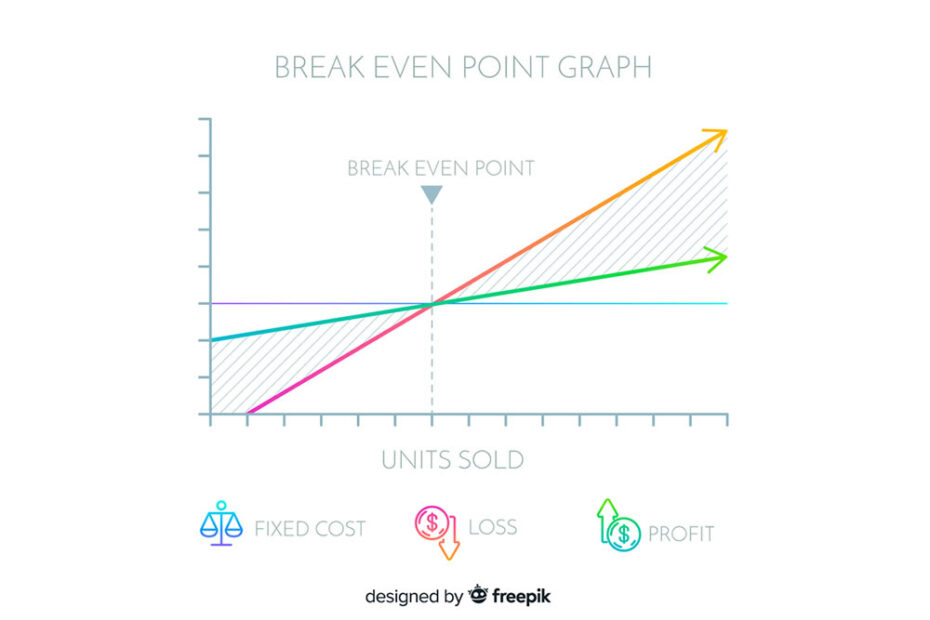
Running a small or medium-sized business without understanding your break-even point is risky. You may be generating sales and still losing money. Break-even analysis removes that uncertainty by showing you exactly how much you must sell to cover your costs and when profit truly begins.
This guide explains break-even analysis in clear terms, shows how to calculate it correctly, and demonstrates how SMEs can use it to reduce costs, lower financial risk, and make better business decisions.
What Is Break-Even Analysis?
Break-even analysis is a financial tool used to determine the level of sales at which total revenue equals total costs. At this point, the business makes neither profit nor loss. This level of sales is called the break-even point.
In practical terms, sales below break-even mean the business is operating at a loss. Sales at break-even mean the business is covering all costs. Sales above break-even generate profit.
Why Break-Even Analysis Is Critical for SMEs
Small businesses operate with limited margins and cash reserves. A clear understanding of the break-even point helps SMEs reduce unnecessary costs, lower financial risk, improve decision-making, and grow sustainably.
By clearly separating fixed and variable costs, business owners can quickly identify waste, overpricing, or underpricing issues that directly affect profitability.
Key Elements of Break-Even Analysis
Fixed costs are expenses that remain constant regardless of sales volume. These include rent, salaries, insurance, equipment leases, and basic utilities.
Variable costs change in direct proportion to production or sales volume. Examples include raw materials, packaging, delivery costs, transaction charges, and direct labor.
The selling price is the amount charged per unit of product or service.
Break-Even Formula (WordPress-Friendly)
Contribution Margin per Unit
Selling Price minus Variable Cost
Written as
Contribution Margin = Selling Price − Variable Cost
Break-Even Point in Units
Fixed Costs divided by Contribution Margin
Written as
Break-Even Units = Fixed Costs / (Selling Price − Variable Cost)
Break-Even Point in Revenue
Break-Even Units multiplied by Selling Price
Written as
Break-Even Revenue = Break-Even Units × Selling Price
These formulas are clean, simple, and safe for WordPress editors.
Practical Example for SMEs
Assume a small detergent manufacturing business with the following monthly figures.
Fixed costs: ₦500,000
Selling price per carton: ₦5,000
Variable cost per carton: ₦3,000
Contribution margin calculation
₦5,000 − ₦3,000 = ₦2,000
Break-even units calculation
₦500,000 / ₦2,000 = 250 cartons
Break-even revenue calculation
250 × ₦5,000 = ₦1,250,000
This means the business must sell 250 cartons per month before it begins to make profit.
How Break-Even Analysis Improves Business Decisions
Break-even analysis supports smarter pricing decisions by showing whether current prices can realistically cover costs.
It improves cost management by highlighting which expenses have the greatest impact on profitability.
It allows business owners to set realistic sales targets that ensure survival first and profit next.
It helps evaluate expansion and investment decisions by showing how much additional sales are required to justify growth.
Common Mistakes SMEs Make
Many SMEs exclude the owner’s salary from costs, underestimate variable expenses, rely on outdated data, or treat break-even analysis as a one-time exercise.
Break-even analysis should be reviewed whenever prices, costs, or market conditions change.
Break-Even Analysis and Long-Term Stability
Businesses that understand their break-even point avoid cash-flow crises, plan growth responsibly, and operate with greater financial confidence.
This clarity strengthens relationships with lenders, investors, and partners and improves long-term stability.
Final Thoughts
Break-even analysis is not an accounting exercise. It is a management tool every SME must understand.
When you know your break-even point, you stop guessing, reduce risk, control costs, and make decisions based on facts, not hope.