
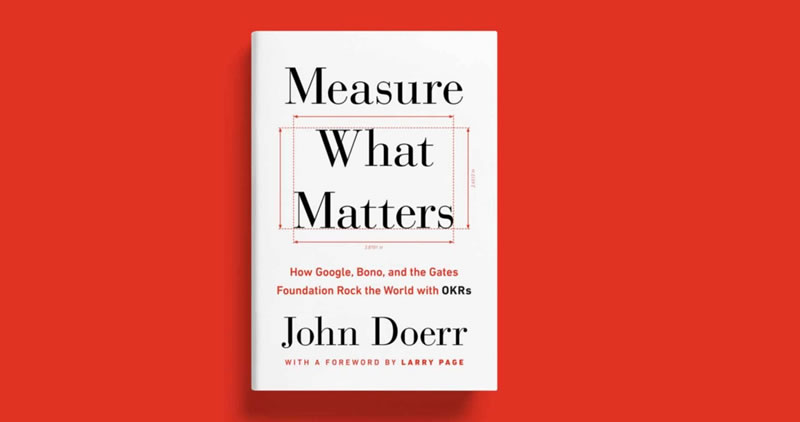
In the ever-evolving landscape of business and entrepreneurship, success is often elusive, with numerous challenges and obstacles to overcome. However, one book has emerged as a game-changer, offering a powerful framework to help businesses and entrepreneurs achieve their goals and unlock their full potential. “Measure What Matters” by John Doerr, a renowned venture capitalist and early investor in companies like Google and Amazon, presents a revolutionary goal-setting system called Objectives and Key Results (OKRs).
Introduction to “Measure What Matters”
“Measure What Matters” is a captivating and insightful book that delves into the art of setting and achieving meaningful goals. Doerr’s extensive experience in the world of technology and entrepreneurship has provided him with a unique perspective on what it takes to drive success in today’s competitive business environment. Throughout the book, he shares valuable lessons and real-world examples from some of the most successful companies in the world, including Google, Intel, and Bono’s ONE Campaign.
The Power of OKRs: A Game-Changing Goal-Setting Framework
At the heart of “Measure What Matters” lies the Objectives and Key Results (OKRs) framework, a goal-setting methodology that has been embraced by companies like Google, Intel, and many others. OKRs are a simple yet powerful way to set and track ambitious goals while ensuring alignment and accountability across an organisation.
Objectives: Defining Your Vision
Objectives are the “what”—the qualitative, aspirational goals that define the direction you want to take your business or venture. They should be inspiring, motivating, and challenging, yet achievable within a specific timeframe, typically a quarter or a year.
Key Results: Measuring Success
Key results are the “how”—the quantitative, measurable milestones that determine whether an objective has been achieved or not. They should be specific, time-bound, and measurable, allowing you to track progress and adjust the course as needed.
The Benefits of Implementing OKRs
Doerr’s book highlights numerous benefits of adopting the OKRs framework, including:
- Focused Prioritisation: OKRs help businesses and entrepreneurs prioritise their efforts and allocate resources effectively, ensuring that everyone is working towards the same critical goals.
- Increased Transparency and Alignment: By clearly defining and communicating objectives and key results, organisations foster transparency and alignment, ensuring that everyone understands the direction and priorities.
- Improved Accountability and Ownership: OKRs promote a sense of ownership and accountability by assigning clear responsibilities and measurable targets to individuals and teams.
- Continuous Learning and Adaptation: The regular cadence of setting and evaluating OKRs encourages continuous learning and adaptation, allowing businesses to pivot and adjust their strategies as needed.
- Fostering Innovation and Stretch Goals: OKRs encourage businesses to set ambitious, “stretch” goals that push the boundaries and drive innovation while still maintaining a balance with more achievable goals.
Implementing OKRs: A Step-by-Step Guide
Doerr’s book provides a comprehensive guide to implementing OKRs effectively in any organisation, regardless of size or industry. Here’s a step-by-step overview:
Step 1: Define Your Objectives
The first step in the OKR process is to define your objectives. These should be qualitative, aspirational goals that align with your company’s mission, vision, and strategic priorities. Objectives should be inspiring, challenging, and achievable within the set timeframe.
Step 2: Establish Key Results
Once you have defined your objectives, the next step is to establish key results. These are the quantitative, measurable milestones that will indicate whether an objective has been achieved or not. Key results should be specific, time-bound, and measurable, allowing you to track progress and make data-driven decisions.
Step 3: Cascading and Alignment
In larger organizations, it’s essential to ensure that OKRs are cascaded and aligned across different levels and teams. This involves breaking down higher-level objectives into more specific, actionable OKRs for individual teams and employees while still maintaining alignment with the overall strategic goals.
Step 4: Tracking and Reporting
Regular tracking and reporting are crucial for the success of the OKR process. Doerr recommends establishing a cadence for reviewing and updating OKRs, typically on a quarterly or monthly basis. This allows teams to monitor progress, identify roadblocks, and make necessary adjustments along the way.
Step 5: Continuous Learning and Improvement
The OKR process is not a one-time exercise; it’s a continuous cycle of learning and improvement. After each cycle, it’s essential to reflect on what worked well and what didn’t and use those insights to refine and improve the process for the next iteration.
Case Studies and Success Stories
Throughout “Measure What Matters,” Doerr shares numerous real-world examples and case studies of companies that have successfully implemented OKRs and reaped the benefits. Here are a few notable examples:
Google: The Pioneer of OKRs
Google is often cited as the company that popularized the use of OKRs. Under the leadership of founders Larry Page and Sergey Brin, Google adopted OKRs as a way to maintain focus and alignment as the company grew rapidly. The OKR system helped Google prioritise its efforts, foster innovation, and achieve remarkable success in various product areas.
Intel: Driving Continuous Improvement
Intel, a leading technology company, has been using OKRs since the late 1990s. The company credits OKRs for helping them navigate through challenging times and foster a culture of continuous improvement. Intel’s use of OKRs has contributed to their ability to stay ahead of the curve and remain a dominant player in the semiconductor industry.
Bono’s ONE Campaign: Driving Social Impact
Doerr’s book also highlights the success of Bono’s ONE Campaign in using OKRs to drive social impact. The organisation, dedicated to fighting extreme poverty and preventable diseases, leveraged OKRs to align their efforts, measure progress, and achieve remarkable results, such as securing billions of dollars in aid for developing countries.
Overcoming Challenges and Pitfalls
While the OKR framework offers numerous benefits, Doerr also acknowledges and addresses common challenges and pitfalls that organisations may encounter during implementation. These include:
Resistance to Change
Introducing a new goal-setting and management system can often face resistance from employees and leaders who are accustomed to traditional methods. Doerr emphasises the importance of clear communication, training, and ongoing support to overcome this resistance and ensure successful adoption.
Setting unrealistic or vague goals
One of the potential pitfalls of OKRs is setting objectives that are too ambitious or vague, or key results that are not truly measurable. Doerr provides guidance on setting realistic yet challenging goals and ensuring that key results are specific and quantifiable.
Lack of commitment and accountability
For OKRs to be effective, there must be a strong commitment and a sense of accountability across the organization. Doerr stresses the importance of leadership buy-in, regular check-ins, and clear consequences for missed targets to foster a culture of accountability.
Balancing Stretch Goals and Achievable Targets
One of the key principles of OKRs is setting ambitious, “stretch” goals that push the boundaries of what’s possible. However, Doerr cautions against setting goals that are unrealistic or demotivating. He offers strategies for striking the right balance between stretch goals and achievable targets.
Adapting OKRs for Different Contexts
While the core principles of OKRs remain the same, Doerr acknowledges that the implementation may need to be adapted to suit different organizational contexts, such as non-profit organizations, government agencies, or small businesses. He provides guidance on how to tailor the OKR framework to fit various scenarios.
Fostering an OKR culture
Beyond the technical aspects of implementing OKRs, Doerr emphasises the importance of fostering an “OKR culture” within an organization. This involves:
Leadership Commitment
Strong leadership commitment and buy-in are essential for the successful adoption of OKRs. Leaders must not only set the example but also create an environment that encourages transparency, accountability, and continuous improvement.
Fostering an OKR Culture (Continued)
Continuous learning and feedback OKRs thrive in an environment where continuous learning and feedback are encouraged. Doerr emphasises the importance of creating safe spaces for teams to openly discuss their progress, challenges, and learnings without fear of punishment or retribution.
Celebrating Wins and Embracing Failures An OKR culture should foster an environment where both wins and failures are celebrated as learning opportunities. Doerr encourages organizations to recognize and reward efforts, even when goals are not fully achieved, as long as valuable lessons are learned in the process.
Promoting transparency and collaboration Transparency and collaboration are essential for the success of OKRs. By openly sharing objectives and key results across teams and departments, organisations can foster better alignment, identify opportunities for collaboration, and leverage collective expertise.
Continuous Improvement and Adaptability An OKR culture should embrace continuous improvement and adaptability. As business landscapes evolve, organisations must be willing to regularly review and adjust their OKRs to ensure they remain relevant and aligned with strategic priorities.
Applying OKRs in Different Contexts
While “Measure What Matters” primarily focuses on the application of OKRs in the context of large corporations and tech companies, Doerr also explores how the framework can be adapted and applied in various other contexts, including:
Small businesses and start-ups OKRs can be a powerful tool for small businesses and start-ups, helping them stay focused, prioritise their efforts, and measure progress effectively. Doerr provides guidance on how to tailor the OKR process to suit the unique needs and resource constraints of smaller organisations.
Non-Profit Organisations and Social Enterprises The principles of OKRs can be applied to drive social impact and achieve mission-driven goals in non-profit organizations and social enterprises. Doerr shares examples of how organisations like Bono’s ONE Campaign have leveraged OKRs to align their efforts and measure their impact effectively.
Personal and professional development Beyond the organisational context, Doerr explores how individuals can use OKRs for personal and professional development. He offers strategies for setting personal goals, tracking progress, and fostering accountability in areas such as career growth, skill development, and work-life balance.
Enhancing OKRs with Complementary Practices
While OKRs are a powerful framework on their own, Doerr recognizes that they can be further enhanced by integrating complementary practices and methodologies. He explores how OKRs can be combined with other approaches, such as:
Agile and Lean Methodologies OKRs can be effectively combined with agile and lean methodologies, enabling organizations to remain nimble and responsive while still maintaining focus on their broader strategic goals.
Design Thinking and User-Centric Approaches By incorporating design thinking and user-centric approaches, organizations can ensure that their OKRs are grounded in a deep understanding of customer needs and market dynamics, fostering innovation and value creation.
Data-driven Decision Making Doerr emphasises the importance of leveraging data and analytics to inform OKR-setting and track progress effectively. He provides guidance on how to integrate data-driven decision-making practices into the OKR process.
Cultivating a Growth Mindset Doerr underscores the importance of cultivating a growth mindset within organisations to fully realise the potential of OKRs. A growth mindset encourages continuous learning, embraces challenges, and fosters a culture of experimentation and innovation.
Beyond Business: OKRs for Personal and Societal Impact
While “Measure What Matters” primarily focuses on the application of OKRs in a business context, Doerr also explores how the framework can be applied to drive personal and societal impact.
Personal Goal-Setting and Growth Doerr provides guidance on how individuals can leverage OKRs for personal goal-setting and growth. By defining clear objectives and key results, individuals can stay focused, measure progress, and hold themselves accountable in areas such as career development, skill acquisition, health and wellness, and personal projects.
Driving Social Impact and Positive Change The principles of OKRs can also be applied to drive positive social impact and address societal challenges. Doerr shares examples of how organisations like Bono’s ONE Campaign and social enterprises have used OKRs to align their efforts, measure their impact, and advance their missions effectively.
Fostering a Culture of Accountability and Responsibility By adopting an OKR mindset, individuals and organisations can cultivate a culture of accountability and responsibility. Doerr emphasises the importance of taking ownership, setting ambitious yet realistic goals, and holding oneself and others accountable for achieving those goals.
Closing Thoughts and Key Takeaways
As Doerr’s book draws to a close, he leaves readers with a powerful message: the ability to set and achieve meaningful goals is a critical skill for success in any endeavour, be it business, personal growth, or driving positive societal change.
Here are some key takeaways from “Measure What Matters”:
- Focus and Alignment: OKRs provide a framework for maintaining focus and aligning efforts across an organisation, fostering a shared understanding of priorities and objectives.
- Accountability and Ownership: By clearly defining measurable key results, OKRs promote a sense of ownership and accountability, empowering individuals and teams to take responsibility for their performance.
- Continuous Learning and Improvement: The cyclical nature of OKRs encourages continuous learning, adaptation, and improvement, enabling organisations to pivot and adjust their strategies as needed.
- Fostering Innovation and Stretch Goals: OKRs encourage businesses to set ambitious, “stretch” goals that push the boundaries and drive innovation while still maintaining a balance with more achievable targets.
- Versatility and Adaptability: While initially developed for the business world, the principles of OKRs can be adapted and applied in various contexts, from personal growth to driving social impact.
- Leadership and Culture: Successful implementation of OKRs requires strong leadership commitment, a culture of transparency, and an environment that fosters continuous learning, feedback, and a growth mindset.
“Measure What Matters” by John Doerr is a must-read for businesses, entrepreneurs, and individuals seeking to unlock their full potential and achieve meaningful goals. By embracing the OKR framework and cultivating an OKR mindset, readers can gain a powerful tool for driving success, fostering accountability, and creating a lasting impact.